Kombucha 221 BC

Order by December 15, 2025 for delivery before the New Year.Our eCommerce will resume fulfillment on January 5th.

The Ancestral Trick That Transforms Cranberry Sauce

by Aneta

Every winter, I return to a small ritual my grandmother never named but lived by: before you cook anything bitter, you soften it overnight.

She never used the word ancestral — it was simply the way women before her cooked. But now I see this quiet step holds generations of kitchen wisdom: the understanding that the right kind of acidity can tame bitterness without stealing the soul of the fruit.

I do the same thing with my cranberries.

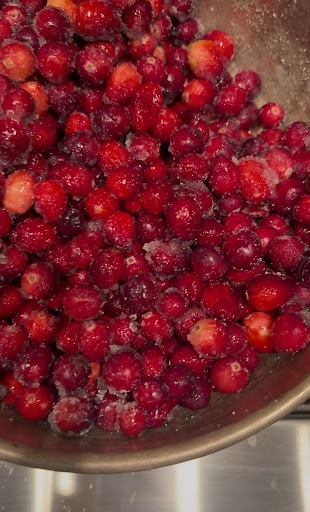
Before I make my cranberry sauce, I soak the berries overnight in ginger kombucha. It sounds modern, but the principle is ancient:

acid humbles bitterness.

And kombucha — with its natural organic acids — does the work beautifully. The cranberries stay themselves: bright, tart, alive. The harshness dissolves.

What remains tastes like the best version of winter.

And in this bowl of ruby-red fruit, I’m reminded of something deeper:

God put an entire pharmacy into this little berry.

Cranberries are loaded with vitamin C, polyphenols, proanthocyanidins, and antioxidants so powerful that the largest peer-reviewed scientific analysis of cranberry phytonutrients calls them “one of the most bioactive berries in nature.”
We think we discover health — but He designed it long before we had language for it.

Why Chunky Cranberry Sauce Is the Most Ancestral

Once the berries have rested overnight, they’re softened just enough. Not collapsed. Not sweetened. Just gently humbled.

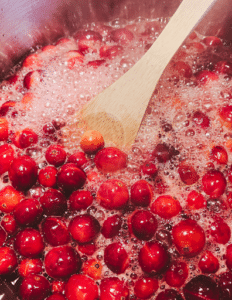
When they hit the pot, some burst quickly, others take their time, and a few stay intact. I love that. I will never trade this rustic, textured honesty for a perfectly blended purée.

Chunkiness is character.

Chunkiness is heritage (before blender era)

Chunkiness is real.

It’s imperfect in the way ancestral cuisine always has been — where perfection wasn’t the goal. Nourishment was.

Ancestral Cranberry Sauce (Chunky + Kombucha-Soaked)

Ancestral Cranberry Sauce (Kombucha-Soaked)

Ingredients
  

  • 4 cups fresh cranberries
  • 1 bottle ginger kombucha
  • 1 cup organic cane sugar
  • Juice of 1 orange
  • Peel of 1 orange
  • Pinch of salt

Instructions
 

  1. Soak cranberries overnight in kombucha.
  2. Drain half the liquid.
  3. Add remaining kombucha, sugar, orange juice, peel, and salt.
  4. Simmer 10–12 minutes until most berries burst.
  5. Remove peel and cool.
  6. Serve chunky — the way ancestral foods were always meant to be.

Why It Works

Cranberries contain some of the most studied antioxidants and polyphenols in nutritional science — a true pharmacy created by God.
Perfect on sourdough, yogurt, roasted meats, and in hot tea.

How I Use It (Including the Tea Tradition)

I use this cranberry sauce the way my grandmother used any good preserve:

  • On sourdough with butter (Chleb z drzemem)
  • Over yogurt or kefir
  • With roasted chicken
  • On a cheese board
  • Swirled into oatmeal

But my favorite winter ritual is simple:

I stir a spoonful into hot tea.

Across Eastern Europe, Russia, Turkey, and much of Asia, adding preserves to tea is completely normal. As the cranberry melts, the ginger kombucha notes unfold, and the citrus softens, your tea becomes a quiet act of care.

What This Recipe Really Teaches

Every year I make this sauce, I’m reminded how steady traditions really are. The women in my family never used words like “ancestral cooking.” They simply cooked in a way that respected creation and trusted the God who designed it.

So soak your cranberries.

Let them rest.

This small step isn’t nostalgia — it’s practical wisdom that ha

s held up for generations.

And it’s a reminder, once again, that food is medicine.

Every winter, I return to a small ritual my grandmother never named but lived by: before you cook anything bitter, you soften it overnight.

She never used the word ancestral — it was simply the way women before her cooked. But now I see this quiet step holds generations of kitchen wisdom: the understanding that the right kind of acidity can tame bitterness without stealing the soul of the fruit.

I do the same thing with my cranberries.

Before I make my cranberry sauce, I soak the berries overnight in ginger kombucha. It sounds modern, but the principle is ancient:

acid humbles bitterness.

And kombucha — with its natural organic acids — does the work beautifully. The cranberries stay themselves: bright, tart, alive. The harshness dissolves.

What remains tastes like the best version of winter.

And in this bowl of ruby-red fruit, I’m reminded of something deeper:

God put an entire pharmacy into this little berry.

Cranberries are loaded with vitamin C, polyphenols, proanthocyanidins, and antioxidants so powerful that the largest peer-reviewed scientific analysis of cranberry phytonutrients calls them “one of the most bioactive berries in nature.”

We think we discover health — but He designed it long before we had language for it.

Why Chunky Cranberry Sauce Is the Most Ancestral

Once the berries have rested overnight, they’re softened just enough. Not collapsed. Not sweetened. Just gently humbled.

When they hit the pot, some burst quickly, others take their time, and a few stay intact. I love that. I will never trade this rustic, textured honesty for a perfectly blended purée.

Chunkiness is character.

Chunkiness is heritage (before blender era)

Chunkiness is real.

It’s imperfect in the way ancestral cuisine always has been — where perfection wasn’t the goal. Nourishment was.

Ancestral Cranberry Sauce (Chunky + Kombucha-Soaked)

Ancestral Cranberry Sauce (Kombucha-Soaked)

Ingredients
  

  • 4 cups fresh cranberries
  • 1 bottle ginger kombucha
  • 1 cup organic cane sugar
  • Juice of 1 orange
  • Peel of 1 orange
  • Pinch of salt

Instructions
 

  1. Soak cranberries overnight in kombucha.
  2. Drain half the liquid.
  3. Add remaining kombucha, sugar, orange juice, peel, and salt.
  4. Simmer 10–12 minutes until most berries burst.
  5. Remove peel and cool.
  6. Serve chunky — the way ancestral foods were always meant to be.

Why It Works

Cranberries contain some of the most studied antioxidants and polyphenols in nutritional science — a true pharmacy created by God.
Perfect on sourdough, yogurt, roasted meats, and in hot tea.

How I Use It (Including the Tea Tradition)

I use this cranberry sauce the way my grandmother used any good preserve:

  • On sourdough with butter (Chleb z drzemem)
  • Over yogurt or kefir
  • With roasted chicken
  • On a cheese board
  • Swirled into oatmeal

But my favorite winter ritual is simple:

I stir a spoonful into hot tea.

Across Eastern Europe, Russia, Turkey, and much of Asia, adding preserves to tea is completely normal. As the cranberry melts, the ginger kombucha notes unfold, and the citrus softens, your tea becomes a quiet act of care.

What This Recipe Really Teaches

Every year I make this sauce, I’m reminded how steady traditions really are. The women in my family never used words like “ancestral cooking.” They simply cooked in a way that respected creation and trusted the God who designed it.

So soak your cranberries.

Let them rest.

This small step isn’t nostalgia — it’s practical wisdom that ha

s held up for generations.

And it’s a reminder, once again, that food is medicine.

  • Welcome to my Journal!

    Aneta
  • Oh hey! Fancy meeting you here.

    Are you as fascinated by our inner garden (also known as the gut microbiome) as I am? I’ve dedicated my life’s work to learning and spreading knowledge about the health benefits that come from reconnecting with the trillions of living microbes around us.

    My name is Aneta. Pour yourself a glass of your favorite ferment and let’s share the knowledge! Read More

  • Have my Journal Delivered to Your Inbox

    SIGN UP FOR OUR NEWSLETTER

    Thank you for subscribing!

  • Categories

  • Our Recent Posts

  • Leave a Reply

    Your email address will not be published. Required fields are marked *

    Rate This Recipe


    The ideas, concepts, and opinions expressed in this blog are intended for educational purposes only. This blog is provided with the understanding that authors and publishers are not rendering medical advice of any kind. It is not intended to replace medical advice, nor to diagnose, prescribe, or treat any disease, condition, illness, or injury. Readers are encouraged to consult with qualified healthcare professionals for medical advice tailored to their individual circumstances.